Guard Wastewater Intelligence
From fragmented insight to system understanding
Infiltration and inflow (I/I) reduce sewer capacity, increase hydraulic loads on wastewater treatment plants and contribute to higher energy consumption and overflow risk.
Digitalisation is often associated with more sensors and more data. But wastewater infrastructure challenges that assumption. Measurements become increasingly sparse further into the sewer network, making permanent instrumentation across an entire system neither practical nor necessary.
Guard Wastewater Intelligence combines existing operational data, machine learning, GIS analysis and autonomous sensing to quantify unwanted water, predict hydraulic loads and identify contributing catchments and pipe sections. By extracting new value from existing measurements and introducing targeted data collection where needed, the solution supports treatment process optimisation, systematic I/I investigations and better prioritisation of rehabilitation measures.
The technology follows the reality of the infrastructure, rather than asking the infrastructure to follow the technology.
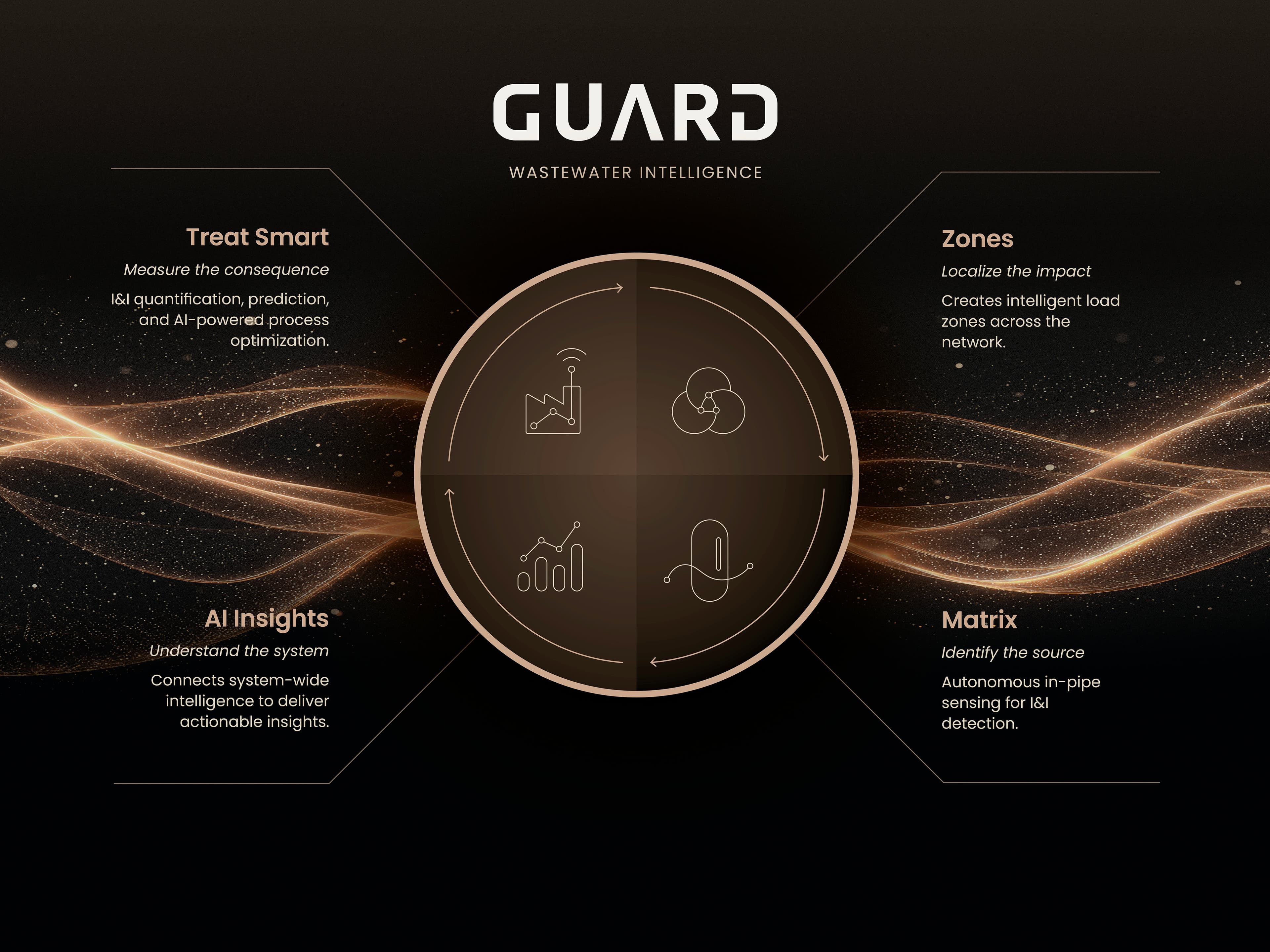
Closing the loop on wastewater management
Understanding wastewater infrastructure requires different analytical methods at different levels of the system.
Treat Smart analyses hydraulic loads and supports treatment plant optimisation. Zones identifies catchments contributing to infiltration and inflow, while Matrix uses autonomous sensing to locate likely infiltration points. AI Insights applies explainable AI to identify patterns, anomalies and relationships in operational data.
Together, the four modules connect treatment plant performance with conditions throughout the sewer network, providing a technical basis for more targeted investigations, operational improvements and long-term infrastructure planning.
Explore Wastewater Intelligence
Understand your wastewater system.
From treatment plant to sewer network, discover what your data reveals about system performance.